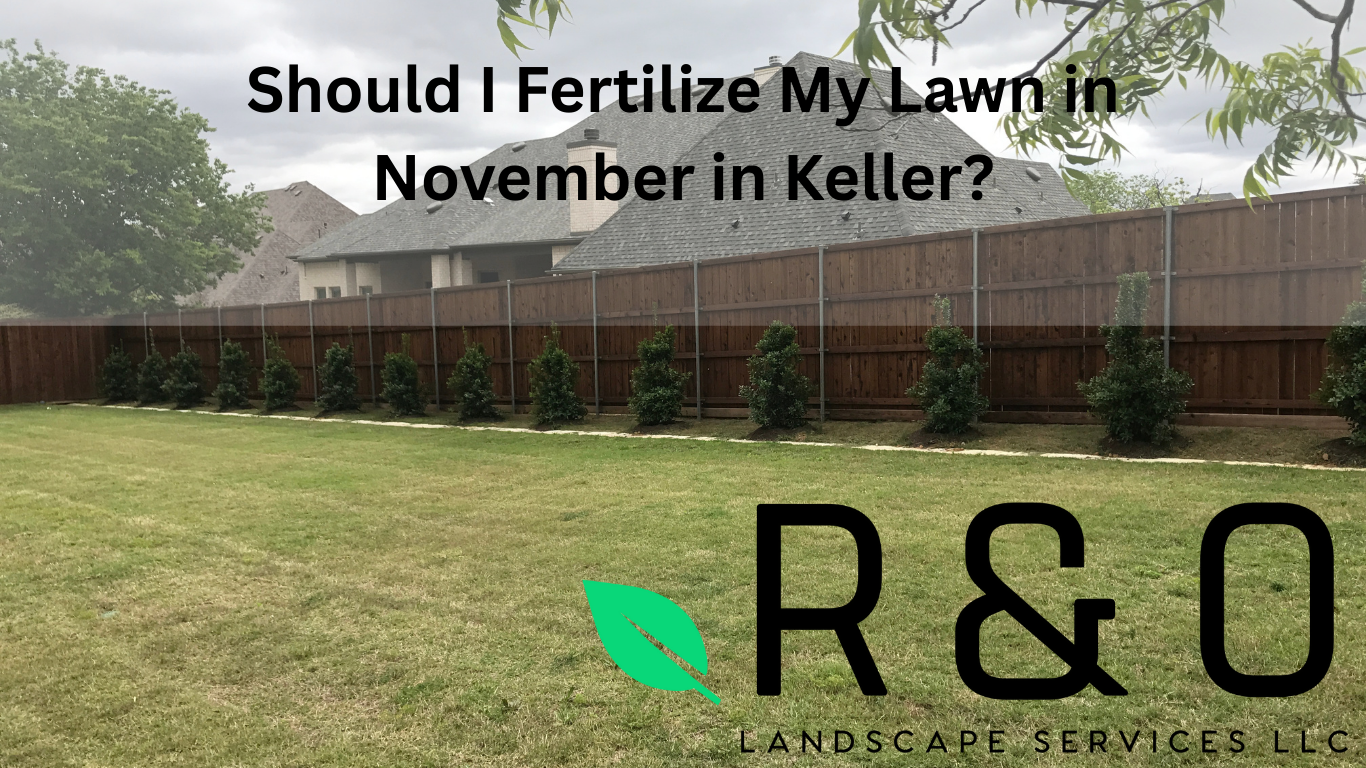
As temperatures cool and the growing season slows, many homeowners wonder, “Should I fertilize my lawn in November in Keller?” The short answer is: yes — if you use the right type of fertilizer and apply it correctly. Late-fall fertilization helps strengthen your grass before winter, supports deeper root growth, and sets your lawn up for a greener, healthier spring.
RandO Landscape works with lawns across Keller, Fort Worth, and surrounding areas, and November fertilization is one of the most important steps for maintaining a thick, resilient yard. With proper timing and the right products, you can give your lawn exactly what it needs in the final stretch of the year.
Why November Can Be a Smart Time to Fertilize
Keller lawns deal with long, hot summers that stress grass and drain nutrients from the soil. By November, most warm-season grasses — like Bermuda and Zoysia — are entering dormancy, but their roots are still active underground.
Fertilizing during this period provides key benefits:
-
Strengthens root systems before the coldest temperatures hit
-
Replenishes nutrients lost during summer heat
-
Improves spring green-up, giving you a fuller, healthier lawn
-
Boosts disease resistance, especially against winter fungus
Even if your grass isn’t actively growing, it’s still absorbing nutrients that support long-term health.
What Type of Fertilizer Should You Use in November?
Not all fertilizers are right for late fall. In November, your lawn needs a formula that focuses on root strength, not blade growth. That means low nitrogen and higher potassium.
A November fertilizer should emphasize:
-
Potassium (K): Enhances root strength and cold tolerance
-
Phosphorus (P): Supports root development (where permitted)
-
Minimal nitrogen (N): Prevents unnecessary top growth during dormancy
If you use a high-nitrogen fertilizer this late in the year, you’ll encourage weak growth that burns out in winter. RandO Landscape applies blends specifically chosen for North Texas soil conditions and your grass type.
For more guidance on seasonal fertilization schedules, the Texas A&M AgriLife Extension’s turf recommendations provide helpful regional insights that align with our professional approach.
What About St. Augustine Lawns?
St. Augustine grass behaves differently in cooler weather. While it also benefits from late-fall nutrition, it’s more sensitive to nitrogen at this time of year.
If you have St. Augustine:
-
Stick to low-nitrogen formulas
-
Avoid weed-and-feed products
-
Consider pairing fertilization with a soil treatment or micronutrient supplement
Our team evaluates your lawn type before recommending any treatment plan.
Pair Fertilization With Fall Lawn Care
Fertilizing in November works best when it’s part of a complete fall care routine. Your lawn will respond more effectively if you combine fertilization with:
-
Core aeration: Loosens compacted soil so nutrients can reach the roots
-
Overseeding (if needed): Fills thin or bare patches for a thicker yard
-
Weed control: Prevents winter weeds like henbit and clover
-
Proper watering: Helps fertilizers absorb before winter dry spells
Our lawn care and maintenance services ensure every part of your yard gets what it needs heading into winter.
How Soil Temperature Impacts November Fertilization
Air temperature isn’t the only factor — soil temperature matters more. Keller lawns typically retain enough warmth through most of November to benefit from fall fertilization.
As long as the soil is above 55°F, your grass roots can still absorb nutrients effectively. That’s why many homeowners mistakenly think it’s “too late” when it’s still the perfect time.
If you’re unsure whether your soil is ready, RandO Landscape can perform a quick inspection to determine ideal timing.
Should You Fertilize if Your Lawn Looks Dormant?
Yes — and here’s why. Dormant grass isn’t dead; it’s storing energy below the surface. A late-fall fertilizer strengthens the root system even when the lawn appears brown or resting.
This hidden growth is exactly what produces thicker, greener grass in early spring. Skipping November fertilizer often results in patchy, weak green-up the following year.
When Is It Too Late to Fertilize?
While November is generally safe, once soil temperatures drop significantly — typically in mid-December — fertilizers become less effective. At that point, your lawn is fully dormant and won’t absorb nutrients properly.
If you miss the window, it’s best to wait until early spring. We can also tailor a winter maintenance plan to keep your lawn protected until then.
If You’re Wondering Whether to Fertilize Your Lawn in November
RandO Landscape helps Keller homeowners make smart decisions about seasonal yard care, and November fertilization is one of the best ways to boost long-term grass health. With the right formula and timing, your lawn will head into winter stronger and come back in spring thicker, greener, and more resilient.
If you’re ready to give your lawn the nutrition it needs, our team provides professional fertilization, aeration, weed control, and maintenance tailored to North Texas yards. Contact us today to schedule your November service.