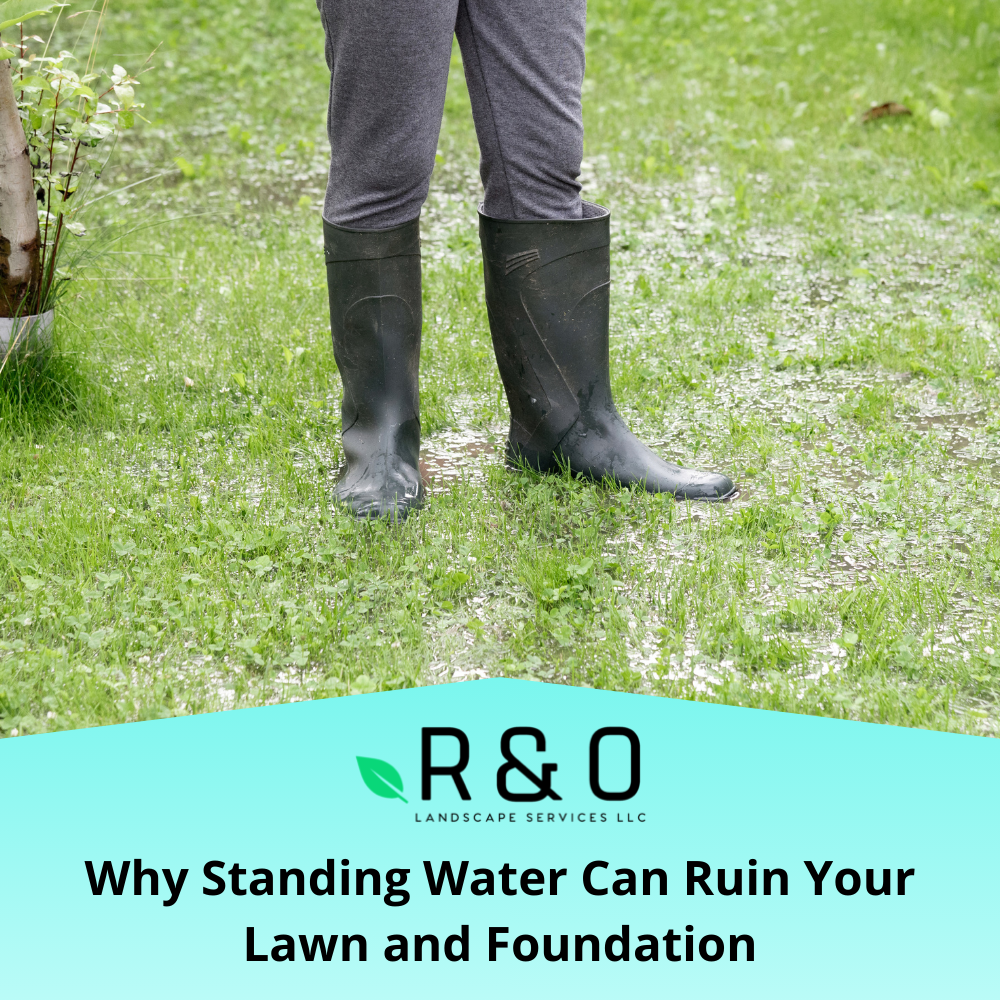
Standing water may seem like a temporary inconvenience after rainfall, but when it lingers in your yard, it can quietly cause serious and expensive damage. What starts as soggy grass or puddles can quickly turn into dying turf, structural issues, and long-term foundation problems. At R&O Landscape Services, we help homeowners identify and correct drainage issues before they escalate into costly repairs.
Understanding how standing water affects both your lawn and your home is the first step toward protecting your property.
How Standing Water Damages Your Lawn
Grass roots need a balance of water, oxygen, and nutrients to thrive. When water pools on the surface or saturates the soil for extended periods, that balance is disrupted. Oxygen is pushed out of the soil, essentially suffocating the root system. As a result, grass becomes weak, thin, and vulnerable to disease.
Prolonged moisture also creates ideal conditions for fungal growth. Lawn diseases thrive in damp environments and can spread quickly through waterlogged turf. You may notice yellowing patches, thinning areas, or grass that pulls up easily from the soil because the roots have weakened.
Standing water also washes away nutrients and topsoil. As water flows or pools repeatedly in the same areas, it strips away essential elements your lawn needs to grow, leading to uneven growth and bare spots. Those bare spots then become prime targets for weeds, which further damage the health and appearance of your yard.
The Connection Between Standing Water and Soil Compaction
One often overlooked effect of standing water is soil compaction. When soil remains saturated, its structure breaks down. Over time, this creates dense, compacted areas that resist drainage even more, creating a cycle where water continues to collect.
Compacted soil prevents water from soaking in properly and limits root expansion. Even when the surface dries out, the damage below remains. Grass growing in compacted areas struggles to establish strong roots, leading to recurring problem spots in your lawn.
How Standing Water Threatens Your Foundation
While lawn damage is frustrating, foundation damage is far more serious. When water consistently pools near your home, it places constant pressure on the foundation. Over time, this moisture can seep into cracks, weaken structural materials, and cause the soil beneath your home to shift.
In areas with clay-heavy soil, like much of North Texas, this problem is amplified. Clay expands when wet and contracts when dry. Repeated cycles of expansion and contraction can lead to foundation movement, cracks in walls, uneven floors, and sticking doors or windows.
Standing water near the foundation also increases the risk of moisture intrusion into crawl spaces or basements. This can lead to mold growth, wood rot, and compromised indoor air quality—all of which can affect the health of your home and the people living in it.
Erosion and Landscape Damage
Poor drainage doesn’t just affect grass and foundations—it also damages landscaping features. Flowerbeds, mulch, and decorative elements can wash away when water has no controlled path to follow. Erosion around trees and shrubs exposes roots, weakening plants and making them more susceptible to stress or failure.
Hardscapes such as patios, walkways, and retaining walls can also be impacted. Water undermines the base beneath these structures, causing shifting, sinking, or cracking. What began as a drainage issue can quickly turn into multiple repair projects across your property.
Common Causes of Standing Water
Standing water is rarely caused by a single issue. In many cases, it’s the result of several factors working together, including improper grading, compacted soil, poor downspout placement, or outdated drainage systems.
Low spots in the yard naturally collect water, especially if the soil cannot absorb it quickly. Downspouts that discharge too close to the foundation add excess water where it’s least wanted. Over time, these issues compound, making drainage problems worse with each rainfall.
Why Drainage Solutions Matter
The key to stopping standing water is proper drainage design. Effective drainage systems redirect water away from problem areas and guide it to safe discharge points. This protects your lawn, foundation, and landscape features from damage while improving overall yard usability.
Drainage solutions may include regrading, French drains, surface drains, downspout extensions, or decorative options like dry creek beds. Each property requires a customized approach based on soil conditions, slope, and layout.
Protect Your Property Before Damage Occurs
Standing water is more than a cosmetic issue—it’s a warning sign. Left unaddressed, it can destroy your lawn, damage your foundation, and reduce your property’s value. Early intervention is the most effective and affordable way to protect your home.
At R&O Landscape Services, we specialize in identifying drainage problems and designing solutions that work with your landscape, not against it. Our team evaluates water flow patterns, soil conditions, and existing systems to create a plan that eliminates standing water and prevents future damage.
If you’ve noticed persistent puddles, soggy grass, or water collecting near your home, it’s time to act. Contact R&O Landscape Services today to schedule a drainage assessment and protect your lawn and foundation before standing water causes lasting damage.